StrengthBuzz is reader-supported. When you buy through links on our site, we may earn an affiliate commission at no extra cost to you. Read our Disclosure
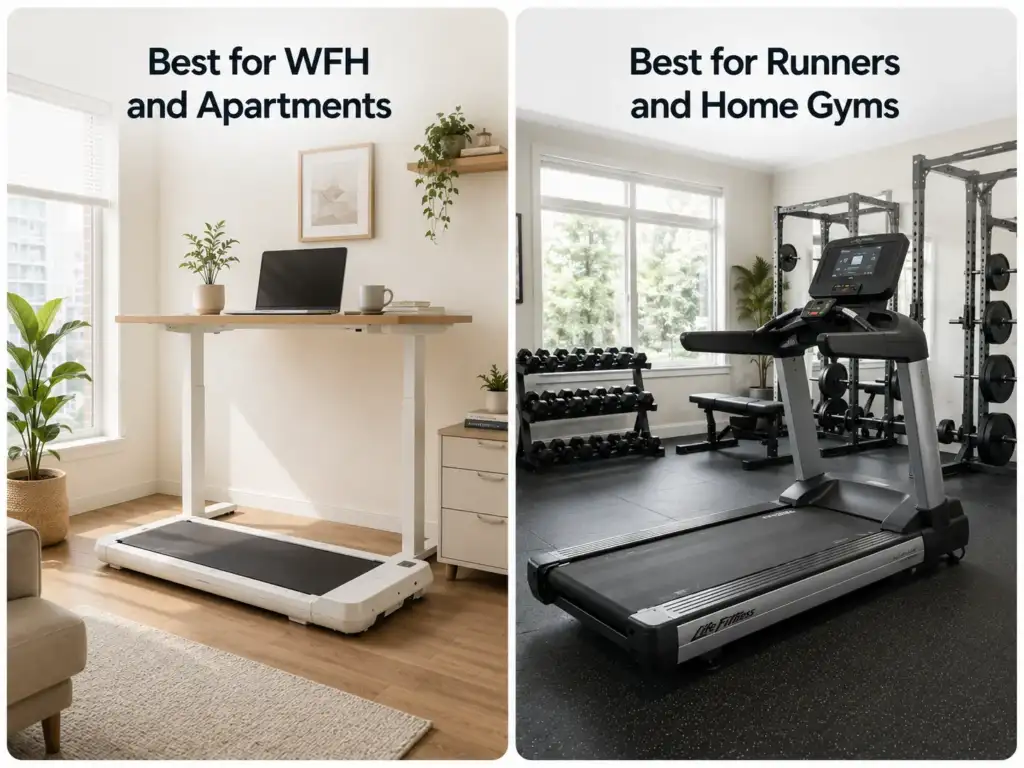
If you are searching walking pad vs treadmill, here is the direct answer: for most work-from-home professionals and apartment dwellers, a walking pad is the better choice. For runners and dedicated home gym users, a traditional treadmill wins.
The longer answer matters though, because buying the wrong one means the machine collects dust within a month. That is not an exaggeration. It is the single most documented outcome in every WFH and home gym community online. This guide covers every meaningful difference between the two so you know exactly which one fits your situation before you spend a dollar.
Quick Verdict Walking pad: best for WFH professionals, apartment dwellers, and anyone who wants daily movement without dedicated workout time. Treadmill: best for runners, home gym owners, and anyone whose fitness goals include jogging or structured cardio training.
Table of Contents
- What Is a Walking Pad?
- What Is a Traditional Treadmill Built For?
- Walking Pad vs Treadmill: Side-by-Side Comparison
- The 6 Differences That Actually Drive the Decision
- Who Should Buy a Walking Pad
- Who Should Buy a Traditional Treadmill
- Can a Walking Pad Actually Replace a Treadmill?
- Frequently Asked Questions
- The Bottom Line
Walking Pad vs Treadmill: Key Numbers at a Glance
- Walking pads weigh 28 to 50 lbs vs 150 to 300+ lbs for traditional treadmills
- Walking pads operate at 40 to 65 dB vs 65 to 80 dB for treadmills at walking speed
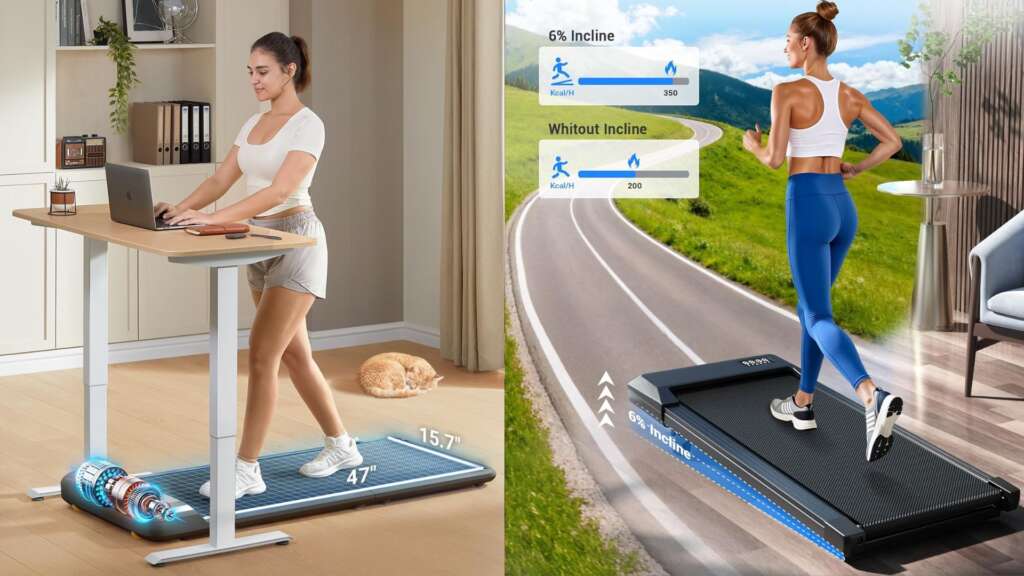
- Walking at 10% incline burns 50 to 70% more calories than flat walking at the same pace
- Most WFH users settle at 1.8 to 2.2 MPH as their daily working speed after the first week
- Walking pads store flat at 4 to 6 inches vs treadmills requiring 3 to 4 feet of wall space when folded
- Standard walking pads support 220 to 300 lbs vs 300 to 400 lbs for mid-range treadmills
- Premium walking pads rated for continuous daily operation of 3 to 5 hours outperform budget models significantly in long-term WFH use
What Is a Walking Pad?
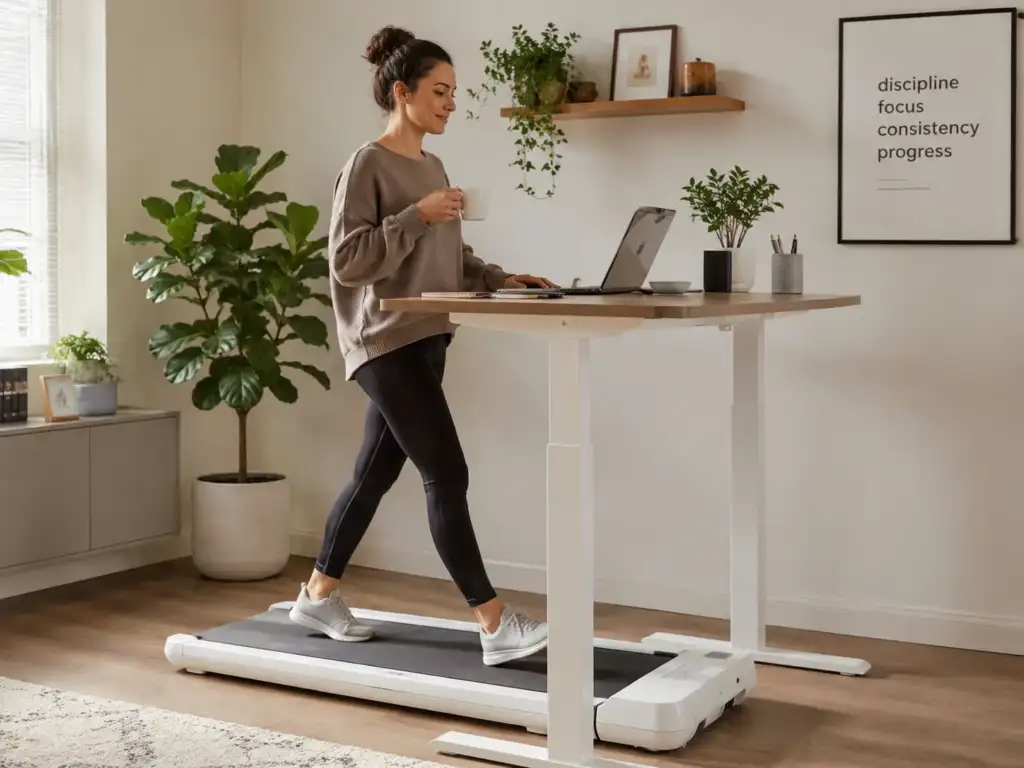
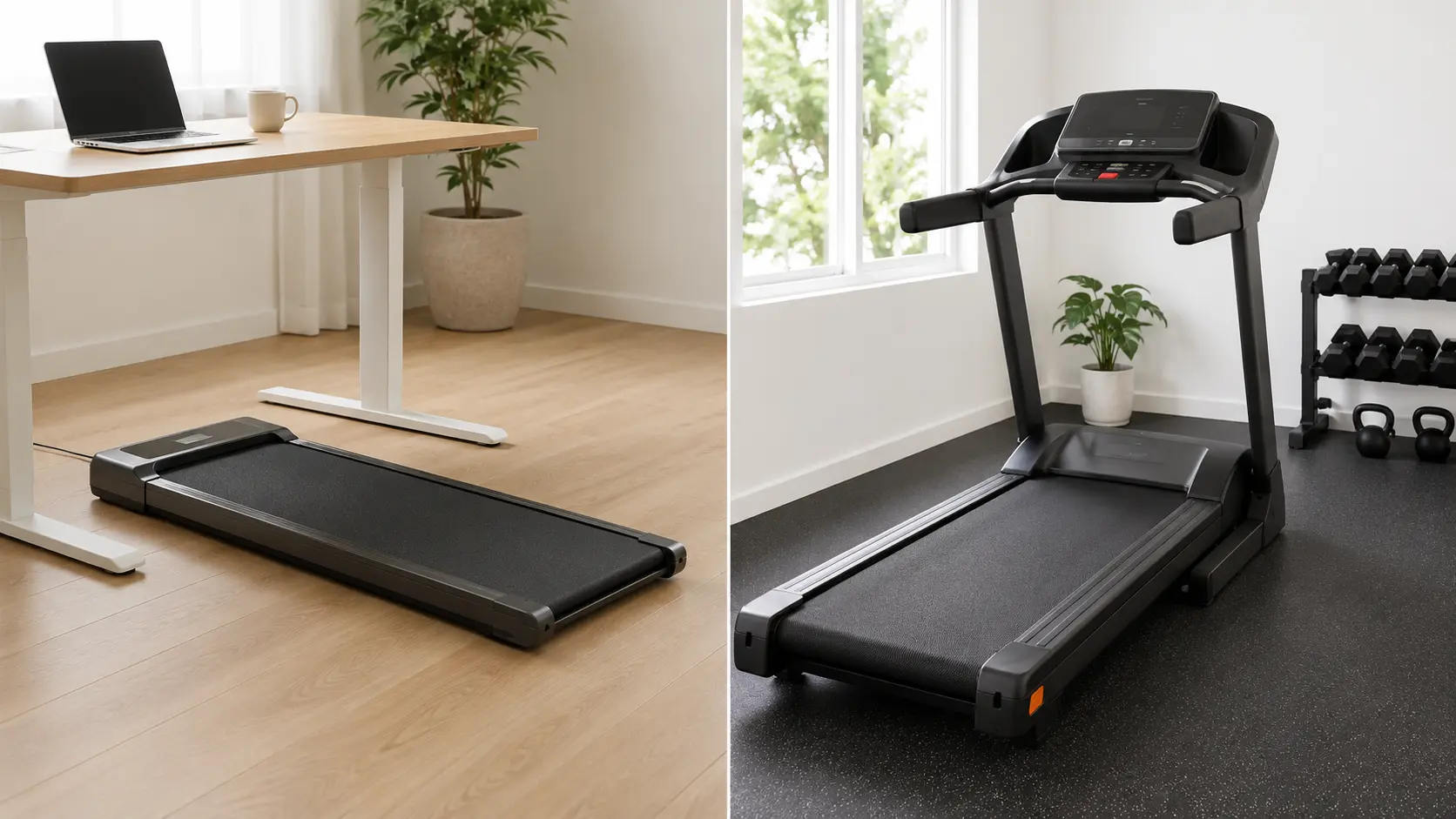
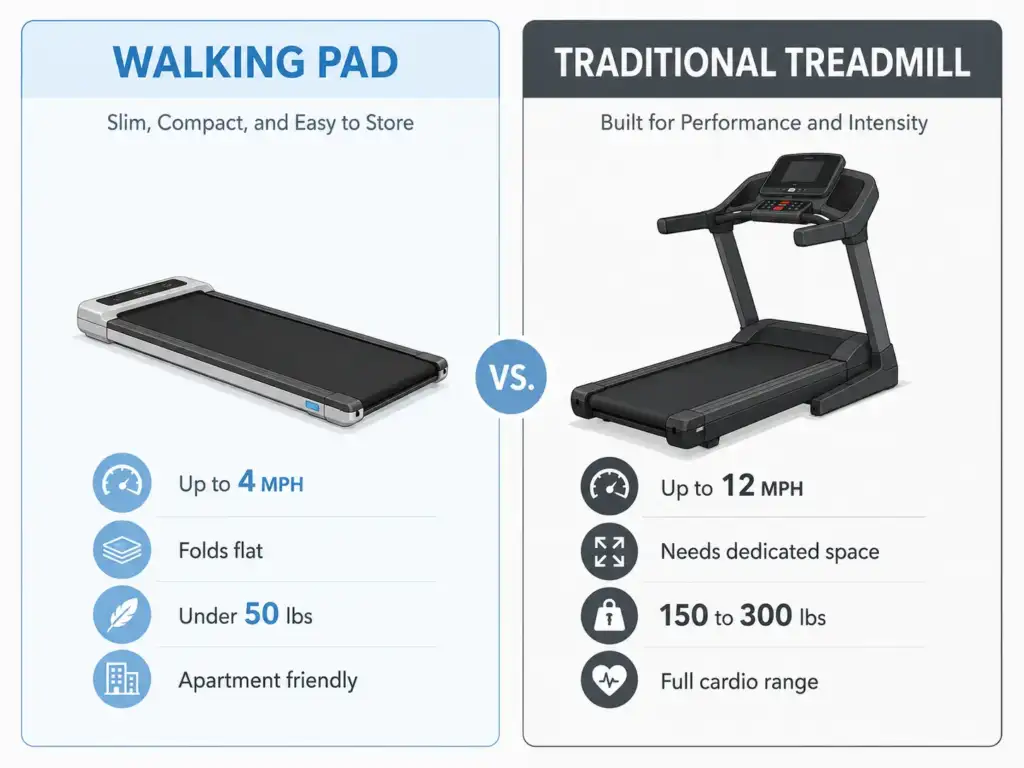
A walking pad is a compact, low-profile walking machine built specifically for slow-speed movement in small spaces. Most models operate between 0.5 and 4 MPH. The deck sits just 4 to 6 inches off the ground. There is no tall upright frame, no console tower, and on most models, no fixed handrail.
The design originated in Japanese and South Korean city apartments where a full-size treadmill is not physically an option. The work-from-home movement brought walking pads into mainstream US use because the fit was obvious: walk at 1.5 to 2 MPH during calls, emails, and meetings without ever leaving your desk.
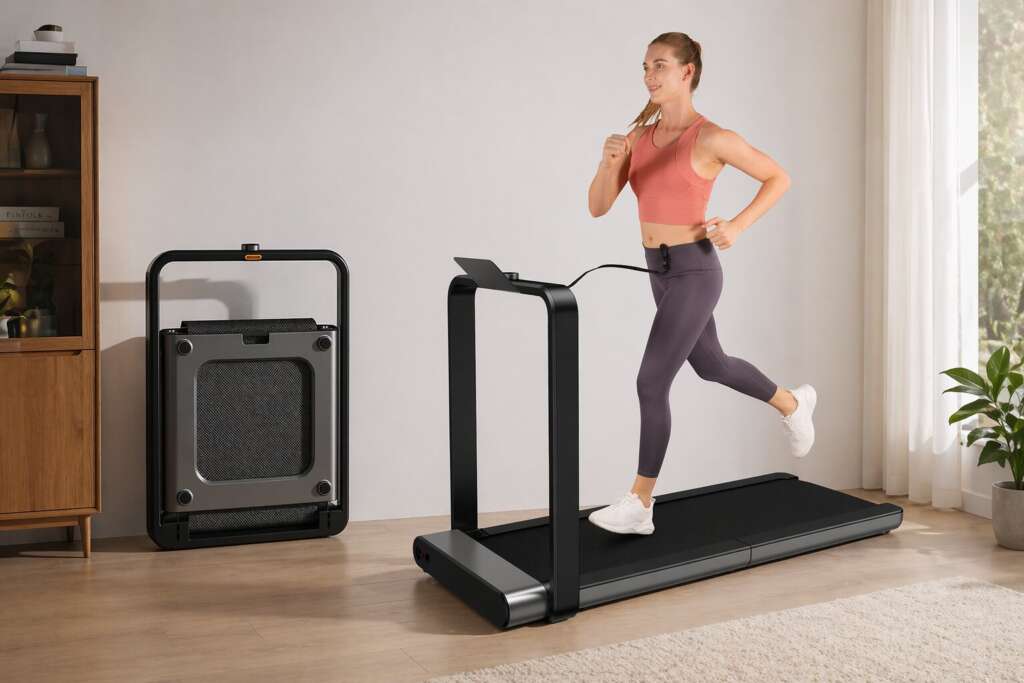
If you have been researching the best walking pad under desk treadmill options, you already know the category runs from budget machines under $200 to premium options like the WalkingPad X21, which folds to briefcase size and has won two international design awards.
What Is a Traditional Treadmill Built For?
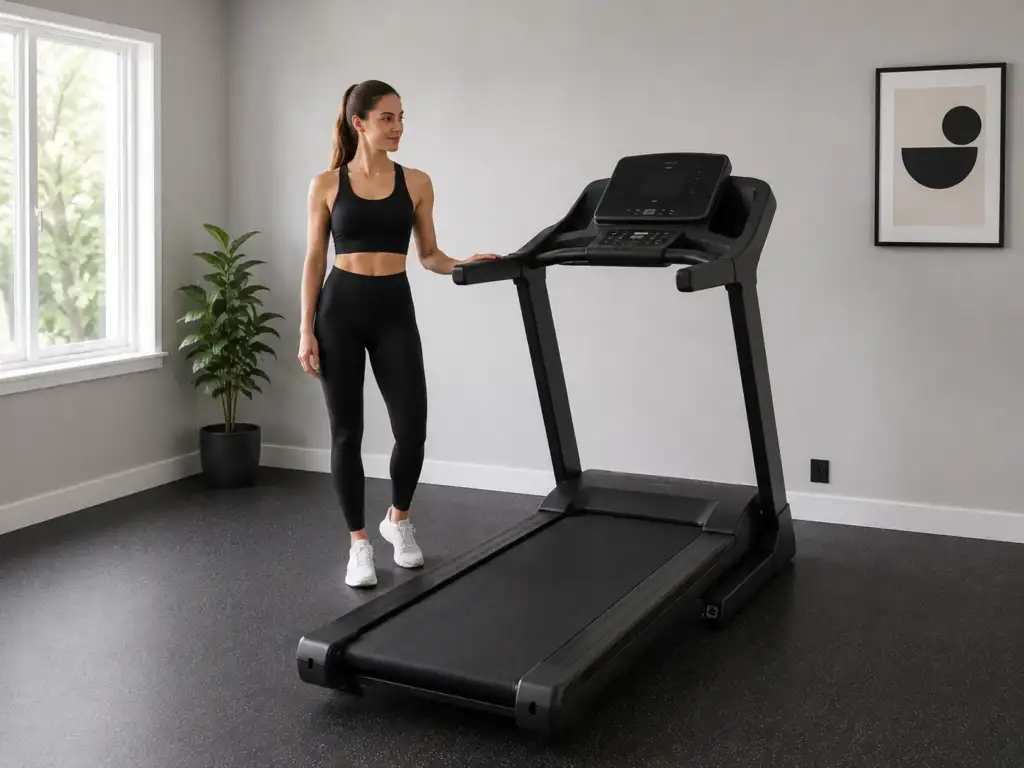
A traditional treadmill is a full-size cardio machine covering the complete range of walking, jogging, and running, typically 0.5 to 12 MPH. It includes a motorized incline system, a wide cushioned running belt, and a console that tracks heart rate, pace, distance, and calories.
These machines are heavy. A typical folding treadmill weighs 150 to 300 pounds or more. Even folded upright against a wall, most take up 3 to 4 feet of floor space and stand 5 to 6 feet tall. The motor is built for sustained running, the belt is wide enough for a natural running stride, and the frame absorbs real impact.
For anyone who wants to jog or run at home, a traditional treadmill is the only machine that makes structural sense. Walking pads are simply not designed for running.
Walking Pad vs Treadmill: Side-by-Side Comparison
| Feature | Walking Pad | Traditional Treadmill |
|---|---|---|
| Speed Range | 0.5 to 4 MPH (typical) | 0.5 to 12 MPH |
| Deck Height | 4 to 6 inches | 8 to 12 inches |
| Noise at Walking Speed | 40 to 65 dB | 60 to 80 dB |
| Machine Weight | 28 to 50 lbs | 150 to 300+ lbs |
| Stored Footprint | Slides flat under a desk or bed | 3 to 4 ft of wall space |
| Incline | None or limited auto incline | Up to 15% motorized |
| Running Capable | No | Yes |
| Price Range | $150 to $1,000 | $500 to $3,000+ |
| Best Suited For | WFH professionals, apartments | Dedicated home gym, runners |
The 6 Differences That Actually Drive the Decision
1. Space Is Usually the Whole Decision
A standard treadmill unfolded measures roughly 78 inches long and 36 inches wide. Folded upright, it still needs 3 to 4 feet of clearance from the wall and stands nearly as tall as a person. In a studio apartment, a spare bedroom that doubles as an office, or any room where furniture already fills the floor plan, this is a real problem.
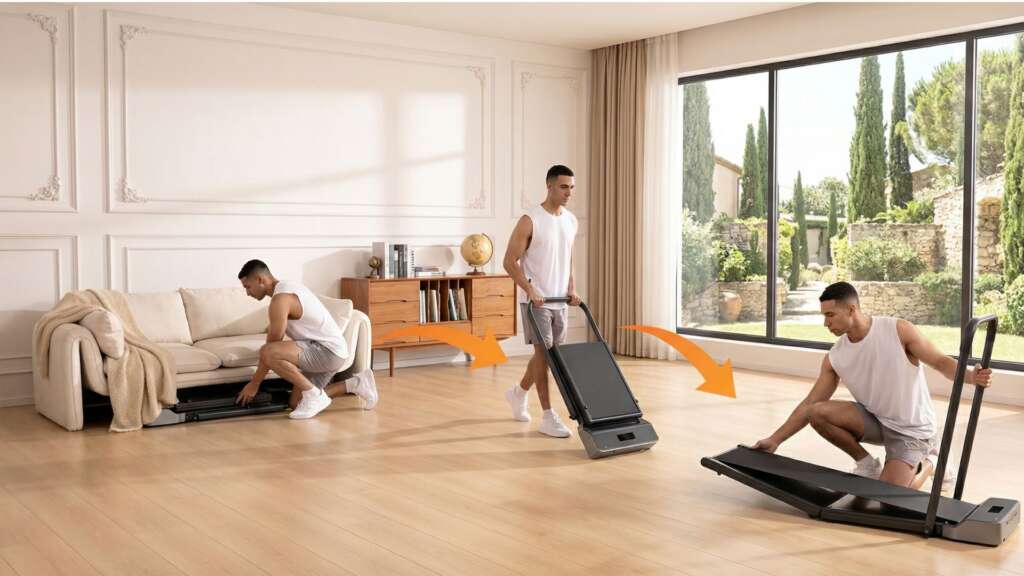
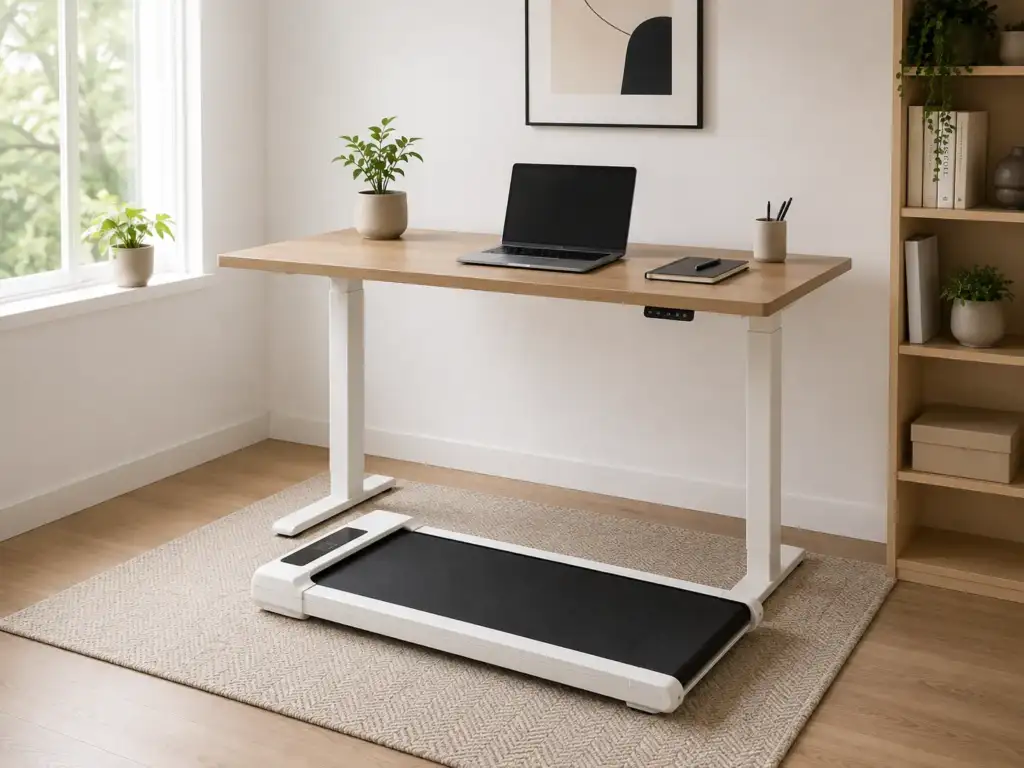
A walking pad changes the math entirely. The best options for compact living, including those covered in the best walking pads for apartments guide, fold flat to 4 or 5 inches and slide under a desk or bed. They do not take up a corner of the room. They do not require a dedicated space. When you are not using one, it simply does not exist visually.
If your floor plan cannot accommodate a traditional treadmill in a usable position, the decision is already made.
2. Noise During Work Hours Is Non-Negotiable
Noise is the number one reason walking pads exist as a separate category. Traditional treadmills at jogging speed produce 65 to 80 dB, which is roughly equivalent to a vacuum cleaner running in the same room. Even at walking speed, the motor and belt contact on a standard running deck is clearly audible to people on a video call.
Walking pads are engineered specifically to solve this. The quietest models on the market, like the PACEROCKER at under 40 dB, are effectively silent to Zoom and Teams participants when operating at desk walking speeds. For reference, 40 dB is a quiet library. At that level, your mechanical keyboard is making more noise than the machine underneath your feet.
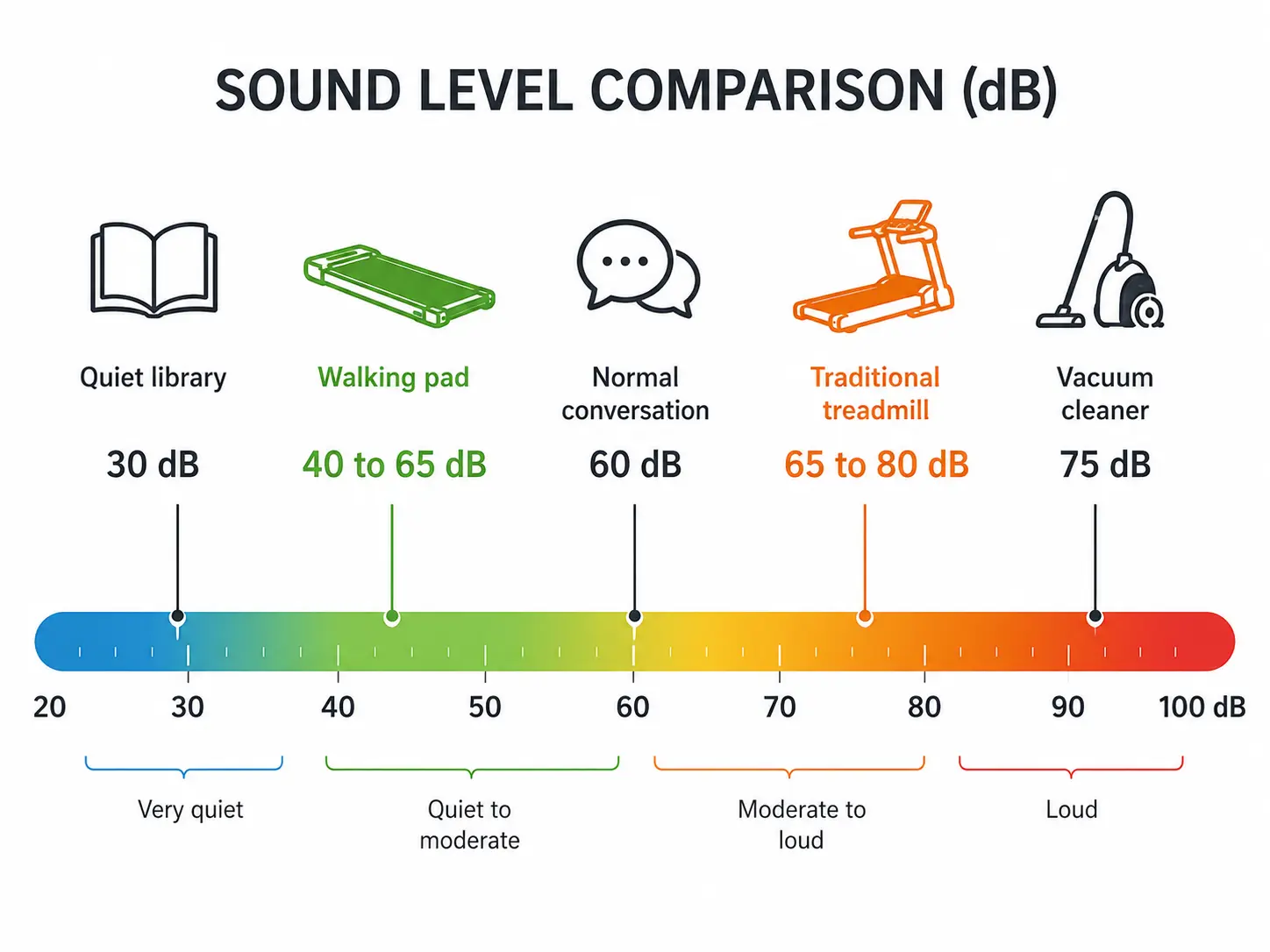
If you work in a shared-wall apartment, have family in nearby rooms, or take calls for most of your workday, the noise difference between these two categories is not a minor spec variation. It is the entire reason to choose one over the other.
3. Speed Range Determines Fit
The average WFH user walks at 1.5 to 2.5 MPH during active desk sessions. That is the speed where most people can type accurately, follow a meeting, and stay focused. Every walking pad on the market handles this range without issue.
The gap opens above 4 MPH. If jogging or running is any part of your plan, a walking pad is not the right machine. The motors are smaller, typically 1.0 to 2.5 HP. The belt is narrower than a proper running surface. Most models have no safety handrail, which makes running at speed genuinely risky. The machines are not rated for it, and long-term buyer data confirms the thermal and mechanical consequences of pushing them beyond their design range.
Traditional treadmills are rated for the full range. Motors at 3.0 HP and above in mid-range models are built to handle sustained running for years. The wider belt accommodates natural stride. The handrail provides real support.
The honest split: if you want movement during work hours, you do not need a treadmill. If you want cardiovascular training at jogging or running pace, you do not want a walking pad.
4. Weight Capacity Needs Checking Before Anything Else
Standard walking pads carry weight limits of 220 to 300 lbs. This is a structural reality driven by compact frames and smaller motors, not a corner that manufacturers cut carelessly. It is the engineering tradeoff for making something that weighs 30 pounds and folds under a desk.
For buyers over 250 lbs, this requires real attention. Not every walking pad is off the table, but the specs need to be verified carefully. The walking pad weight limit guide covers what manufacturer ratings actually mean in practice and how verified buyer data fills in what the spec sheet leaves out. Some models, including the TRAILVIBER and the PACEROCKER, are rated to 450 lbs, which is well outside the typical range for this category.
Traditional treadmills at mid-range price points generally offer 300 to 400 lb capacity as standard. For heavier buyers who also want the option to jog, a traditional treadmill fits the combination more reliably.
5. Incline Changes the Calorie Equation More Than Most People Expect
Walking on a flat surface at 2 MPH burns roughly 200 to 240 calories per hour for an average adult. The same pace at 10% incline burns 360 to 400 calories, a difference of 50 to 70 percent, without changing how fast you walk. For WFH users accumulating steps across a full workday rather than doing a dedicated workout session, incline is the most effective variable for increasing calorie output within the speed limits of desk use.
Basic walking pads have no incline. Premium models with auto incline, like the TRAILVIBER with 12 levels up to 12% or the Yesoul W2 Pro with remote-controlled incline adjustment, close this gap considerably. The remote control detail matters specifically for WFH use because you can adjust incline without stopping your work or looking down at a console.
Traditional treadmills include motorized incline as a standard feature at almost every price point. If calorie burn matters to you alongside the space and noise benefits of a walking pad, filtering specifically for models with auto incline is worth doing before defaulting to a full-size treadmill.
6. Daily Session Length Is Where Budget Walking Pads Fail
This is the most under-discussed difference in the category, and it catches a lot of WFH buyers off guard.
Traditional treadmills are engineered for sustained use at variable speeds. Their motors are rated for 30 to 60 minute running sessions multiple times per week, and mid-range models carry motor warranties of 5 to 10 years.
Budget walking pads are designed for much lighter use, typically 20 to 60 minute fitness sessions. WFH use means 2 to 4 continuous hours of daily operation. That exceeds the thermal design limits of many entry-level and mid-range models, which is exactly what causes the motor shutdown patterns documented consistently in long-term buyer reviews.
If you plan to walk 3 or more hours per day as a regular WFH routine, you need a walking pad specifically rated for extended continuous operation. The Yesoul W2 Pro carries a 24-hour continuous operation rating, which is the clearest design signal that a machine is built for this use case. The walking pad overheating guide covers the actual causes in detail, which come down to a combination of speed, user weight, and session length rather than any single factor.
Who Should Buy a Walking Pad
You work from home and want to move more without blocking out dedicated workout time. This is the walking pad’s core use case. Reaching 8,000 to 12,000 steps during a normal workday without scheduling a workout session is genuinely achievable with a walking pad under a sit-stand desk. Nothing else competes on noise, storage convenience, and ease of access.
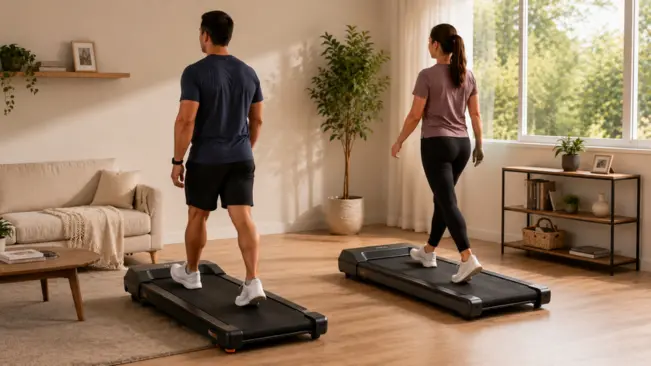
You live in an apartment where space and noise are real constraints, not preferences. A traditional treadmill in an apartment means permanently surrendering floor space and accepting background motor noise whenever you use it. A walking pad folds away completely and runs quietly enough for shared walls and video calls.
You want a machine you will actually use every day, not one you will eventually stop using. The most reliable predictor of abandoned home cardio equipment is inconvenience. Walking pads remove the friction entirely: no dedicated room, no visible footprint, no noisy startup at 6am. The barrier to use is essentially zero.
Your goal is daily movement and step accumulation, not structured cardio training. Walking pads are movement tools. For sustained low-speed walking across a workday, they are excellent. For fitness programming at running intensity, they are the wrong category.
If this describes your situation, the best walking pad under desk treadmill roundup covers the options ranked specifically for WFH use. If you are considering a premium purchase, the WalkingPad X21 review is worth reading before spending close to $900.
Who Should Buy a Traditional Treadmill
You want to jog or run at home. This is the clearest case. No walking pad replaces this, regardless of incline settings or marketing language.
You have a dedicated home gym or garage with space to spare. When space is not a constraint, a traditional treadmill gives you more workout range, a more durable motor at running speeds, and a stable running surface. The investment makes sense at that scale.
Your fitness goals include structured cardio training, not just daily step targets. Training for a 5K, maintaining a running base, or following a cardio program requires speed range and a proper running surface. A traditional treadmill provides both.
You are over 300 lbs and need both capacity and jogging capability. High-capacity walking pads exist, but combining that weight rating with running speed in a compact frame is an engineering constraint the walking pad category has not solved cleanly. A full-size treadmill handles this combination more reliably.
Can a Walking Pad Actually Replace a Treadmill?
For most WFH buyers asking this, the answer is yes, with one clear condition attached.
If your treadmill use was walking at 2 to 3 MPH for 30 to 60 minute sessions a few times per week, a walking pad replaces that function and generally does it better: quieter, more convenient, easier to actually use on a Tuesday morning before a call. The net result is almost always more daily movement, not less.
If your treadmill use included jogging or running at 4 MPH or above, a walking pad is a different machine entirely. It does not replace that function.
The pattern that comes up repeatedly in WFH communities: someone bought a traditional treadmill with good intentions, used it occasionally for walking, and stopped using it because the setup friction and noise made casual daily use inconvenient. A walking pad removes both of those barriers, which is why it tends to get used more consistently even though it does less on paper.
Frequently Asked Questions
Is a walking pad worth buying if I already own a treadmill?
Can a walking pad replace a treadmill for weight loss?
Are walking pads safe for heavier users?
How long do walking pads last compared to traditional treadmills?
Do walking pads work on carpet?
What speed is best for using a walking pad while working?
The Bottom Line
Walking pads and traditional treadmills are not competing for the same buyer. They are built for fundamentally different use cases, and the right choice depends almost entirely on how you plan to use the machine and what your living situation looks like.
A walking pad is the right choice if you work from home, live somewhere space and noise matter, and want a machine you will actually step onto every single day because it is quiet, compact, and never in the way.
A traditional treadmill is the right choice if you run, have a dedicated space for it, and want a long-term fitness machine that covers the full range of cardio training.
Most people searching this comparison in 2026 are WFH professionals or apartment dwellers who have essentially already answered the question. They need movement during work hours, not a running machine. The walking pad wins that comparison clearly.
If that is where you land, the best walking pad under desk treadmill roundup covers the top options ranked specifically for WFH use. If you are a heavier buyer, start with the best walking pads for heavy people before looking anywhere else. And if you are considering the WalkingPad brand specifically, the WalkingPad X21 review gives you a straight answer on who it is right for and who should save their money.
Written by Kiara Vale | StrengthBuzz covers compact home fitness equipment for work-from-home professionals and apartment dwellers. All recommendations are based on verified buyer data and manufacturer specifications.