
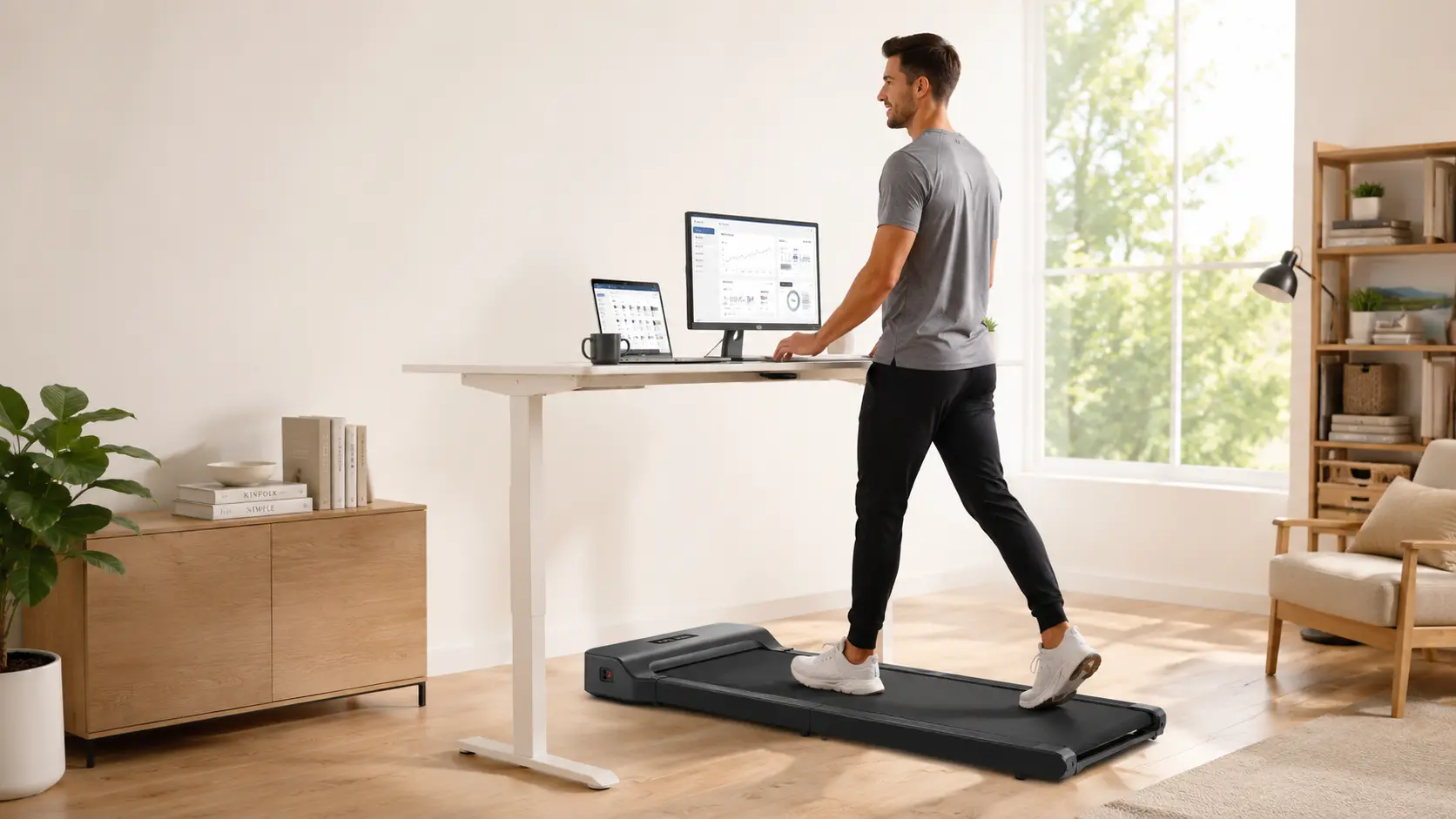
StrengthBuzz is reader-supported. When you buy through links on our site, we may earn an affiliate commission at no extra cost to you. Read our Disclosure
The best walking pad for tall people is one with a belt at least 45 inches long, since anything shorter forces a 6 foot or taller walker to shorten their natural stride. After comparing belt dimensions, weight capacity, and verified buyer reviews across the market, the WalkingPad Z1 (47.6 inches) and the WalkingPad X21 (47.6 x 18.1 inches) come out as the strongest picks for tall walkers, with the MERACH UltraWalk W60 and NordicTrack T Series covering taller users who also need higher weight capacity or a genuine jogging option.
If you are over 6 feet tall, you already know the problem before you even step on a walking pad. Most decks are built around a 40 inch belt, which is fine for someone 5’6″, but it turns into a cramped, choppy shuffle once your natural stride gets longer. That is exactly why finding the best walking pad for tall people means looking past the marketing photos and straight at one number: belt length.
We spent weeks digging through manufacturer spec sheets, verified Amazon listings, and buyer review data to find walking pads that actually give a 6’0″ to 6’5″+ frame room to move. This guide breaks down the best walking pad for tall people by belt size, weight capacity, and real usability, so you are not the person whose toes keep clipping the front rail.
Quick Answer: Best Walking Pad for Tall People
For most tall walkers, the WalkingPad Z1 is the best walking pad for tall people. It has a 47.6 inch belt, the longest available at its price point, folds down to 4.1 inches for easy storage, and supports up to 242 lbs. If you also need a wider belt and a running option, the WalkingPad X21 matches that same 47.6 inch length with an even wider 18.1 inch deck. For tall users over 250 lbs, the MERACH UltraWalk W60 (400 lb capacity) is the better fit, and for anyone over 6’2″ who wants to jog rather than walk, the NordicTrack T Series offers a 55 inch belt, the longest on this list. See the full comparison and buying guide below.
Table of Contents
- Quick Overview: Best Walking Pad for Tall People
- Why Height Matters When Buying a Walking Pad
- How We Chose These Walking Pads
- Best Walking Pad for Tall People: 6 Top Picks
- Walking Pads Tall People Should Avoid
- How to Choose the Right Walking Pad for Your Height
- Walking Pad vs Treadmill for Tall Users
- Frequently Asked Questions
- Final Verdict
Quick Overview: Best Walking Pad for Tall People
Short on time? Here is the fast answer. These are our top picks for the best walking pad for tall people, ranked by who each one actually fits.
Model | Image | Belt Size (L x W) | Best For | Weight Capacity | Rating |

| 47.6" x 17.3" | Best overall for tall walkers | 242 lbs | 4.2 stars | |

| 47.6" x 18.1 | Widest belt, runners over 6'2" | 242 lbs | 4.8 stars | |

| 41.3" x 16.5" | Tall and plus-size users | 400 lbs | 4.4 stars | |
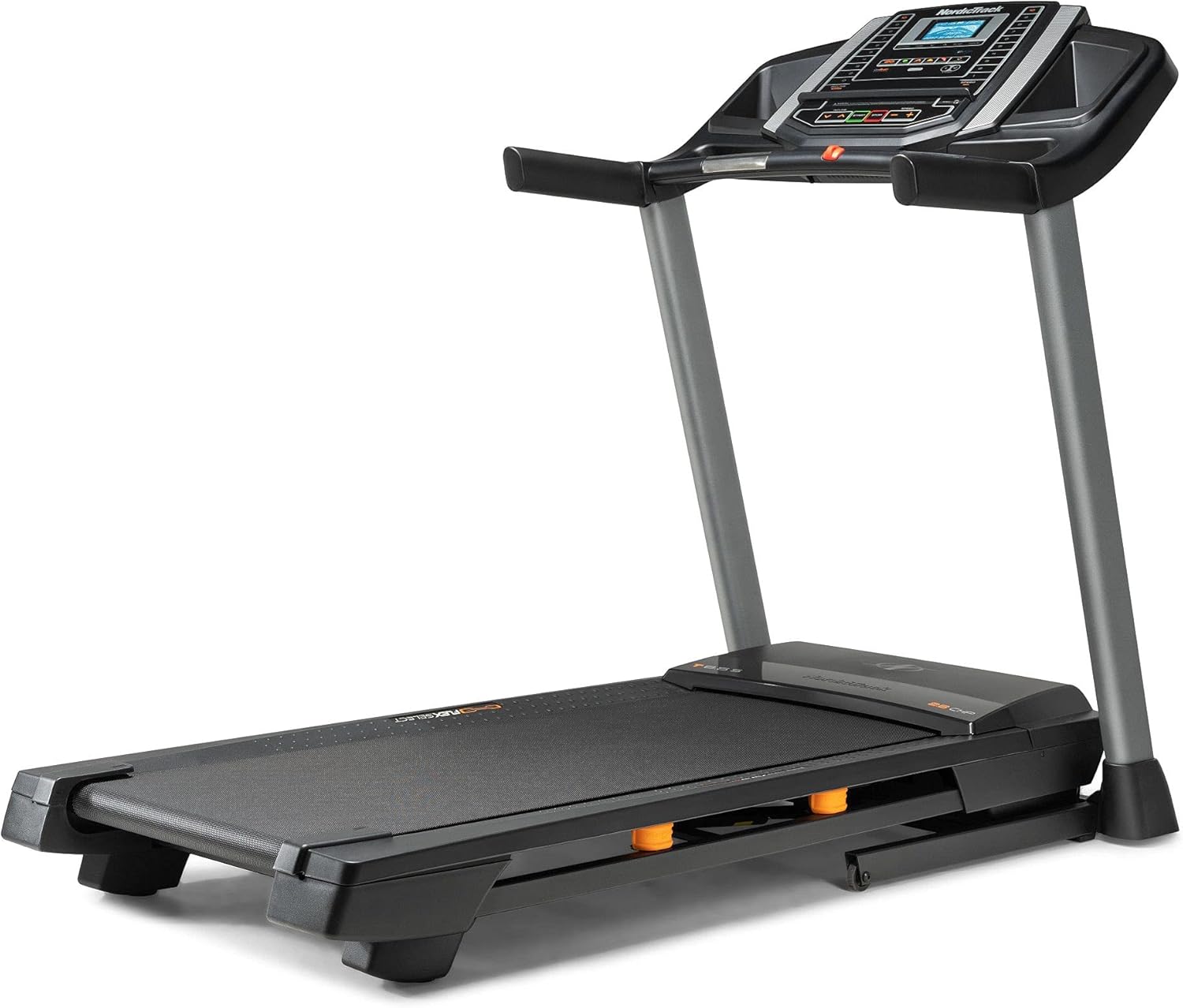
| 55" x 20" | Very tall users (6'2"+) who jog | 300 lbs | 4.4 stars (29,733 reviews) | |

| 47.2" x 17.3" | Premium walk and run combo | 265 lbs | 3.8 stars | |

| 40.1" x 15" | Budget pick, moderate height | 265 lbs | 4.3 stars |
Why Height Matters When Buying a Walking Pad
A walking pad is not a one-size-fits-all product, even though most listings market it that way. The belt is a fixed length, and your stride is not adjustable. When the two do not match, something has to give, and usually it is your form.
How Belt Length Affects Your Stride
Height is the single biggest predictor of stride length, since longer legs cover more ground with every step. A walking stride is roughly 40 to 45 percent of a person’s height, which means a 6’2″ walker naturally covers several more inches per step than someone who is 5’6″. Step onto a 40 inch belt with that kind of stride and your heel starts landing near the back roller, or your toes brush the front housing, on nearly every step.
That is not just uncomfortable. It is how people end up stepping off the back of a walking pad mid-stride, which is one of the more common injury reports in owner reviews. A properly sized deck lets you walk with your normal gait instead of shortening your steps to fit the machine.
What Belt Length You Actually Need, by Height
Use this as a starting point, not a strict rule, since leg length and walking speed both shift the numbers a bit.
| Height | Recommended Minimum Belt Length | Comfortable Belt Length |
|---|---|---|
| Under 5’6″ | 40 inches | 42+ inches |
| 5’6″ to 5’11” | 42 inches | 45+ inches |
| 6’0″ to 6’3″ | 45 inches | 47+ inches |
| 6’4″ and up | 47 inches | 50+ inches, or a full-size treadmill |
If you are consistently walking faster than 3 mph, add a few inches of buffer to whatever number you land on, since speed naturally lengthens stride.
How We Chose the Best Walking Pad for Tall People
We do not physically test every unit in our roundups. Instead, we build each recommendation from manufacturer specifications, verified Amazon listing data, and cross-referenced buyer review scores, then flag anything where the marketing copy and the real-world feedback do not line up. For this guide, that meant filtering out the walking pads that advertise “spacious” decks but measure under 40 inches once you check the actual listing.
Three factors mattered most:
- Belt length over 45 inches. This was the priority cutoff for anything marketed toward taller users, with a couple of exceptions included below for readers who also need higher weight capacity.
- Frame and motor durability. A longer belt puts more leverage on the frame, so we prioritized steel or reinforced aluminum builds with motors rated for continuous use.
- Review volume and consistency. We weighed both star rating and how many verified buyers backed it up. A 4.8 star rating on 7 reviews carries less confidence than a 4.4 star rating on nearly 30,000, and we call that out where it applies.
Best Walking Pad for Tall People: 6 Top Picks for 2026
The WalkingPad Z1 has one of the longest belts of any pad in its price range, at 47.6 inches long and 17.3 inches wide, and it is the pick we come back to for most tall readers who just want to walk during the workday without their stride feeling boxed in. It skips incline, running speed, and a handlebar to keep the price down, a fair tradeoff for straightforward desk-walking.
Key Features
- Belt & Stride Room: 4.5/5
- Build Quality: 4/5
- Motor & Performance: 3.5/5
- Features & Tech: 3/5
- Value for Money: 4.5/5
- Overall Rating: 4.3/5.
The Z1 loses points on features and top speed, but for a guide built around stride room and price, it is hard to beat.
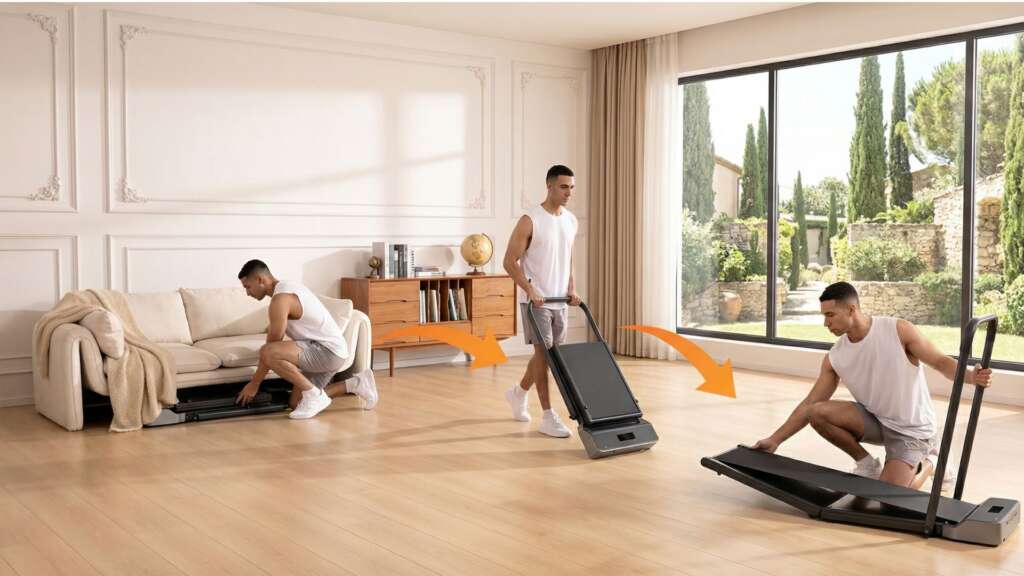
Design and build quality. The frame is aluminum, not steel, which keeps total weight down to 50 lbs but also means it flexes slightly more than heavier-duty picks like the MERACH below if you are near the top of its weight range. The 180 degree fold is genuinely simple, no latches to fight with, and it collapses to about 32 x 22 x 5.4 inches, thin enough to slide flat under a bed frame or a low sofa. At 4.1 inches tall unfolded, the step-on height is low, which matters more than people expect once you are stepping on and off dozens of times a day.
Performance and feel. The belt itself is where the Z1 earns its spot on this list. At 47.6 inches, a 6’0″ to 6’3″ walker can take a full, natural stride without their heel drifting toward the rear roller on faster steps. The brushless motor tops out at 4 mph, which is plenty for desk-walking but rules this out if you want to jog. Acceleration is smooth rather than jumpy, and owners consistently describe the ride as stable even without a handlebar, likely helped by the low deck height keeping your center of gravity close to the floor.
Features. There is no display built into the deck itself; speed, distance, calories, and time show up through the companion app or the included remote. That is a fair tradeoff for the slim profile, but it does mean you will want your phone nearby if you like tracking stats mid-walk. There is no incline and no running mode, so this is a walking-only machine by design, not an oversight.
Assembly and setup. None required. Unfold it, plug it in, and it is ready to walk on, which is typical for pads in this category but worth confirming since some competitors still ship with a few bolts to attach.
Pros:
- Longest belt available at this price point (47.6″)
- Very low step-on height and easy fold-flat storage
- Quiet brushless motor, comfortable for calls and video meetings
- No assembly required
Cons:
- No handlebar, which some tall users will want at faster speeds
- No incline or running mode
- 242 lb weight capacity is a ceiling for larger tall users
Best for: Tall walkers (up to about 6’3″) who want a long belt and an easy fold-and-store routine without paying premium treadmill prices.
Where it falls short: No incline, no running mode, and the 242 lb capacity is a ceiling for larger tall users. If that is you, our guide to the best walking pads for heavy people covers frames built for higher loads.
We already gave the X21 a full standalone review, and it earns a spot here too because its belt actually matches the Z1 on length at 47.6 inches, while beating it on width at 18.1 inches, the widest deck on this list. Add real running speed and a rotary dial control, and it becomes the pick for tall users who want more than a slow desk-walk.
Key Features
- Belt & Stride Room: 5/5
- Build Quality: 4/5
- Motor & Performance: 4.5/5
- Features & Tech: 4.5/5
- Value for Money: 3.5/5
- Overall Rating: 4.4/5.
The best belt dimensions in this guide and genuine running capability, held back only by a price that undercuts the value score.
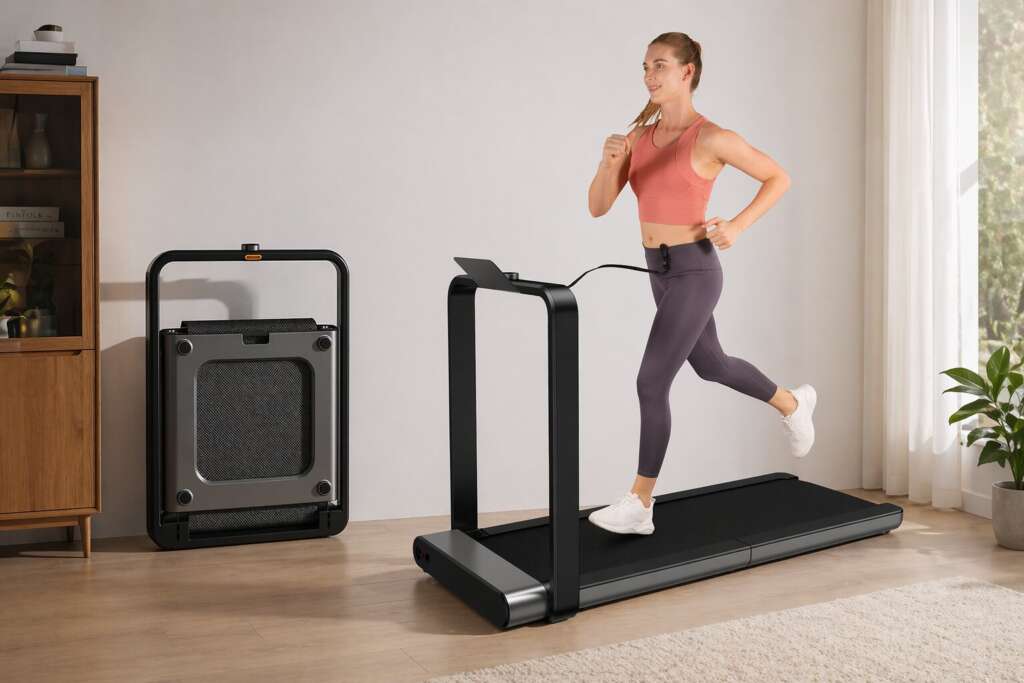
Design and build quality. The frame combines an aluminum alloy chassis with an ABS shell, and the double-fold mechanism is the standout engineering detail here. Instead of folding flat like the Z1, the X21 folds in two steps and stands upright, taking up roughly 0.16 square meters of floor space when stored, closer to a closet item than an under-bed item. A lift-lock keeps it from tipping over once folded, a small but reassuring detail if you have kids or pets around.
Performance and feel. This is where the X21 separates itself from a pure walking pad. The 1.25 HP brushless motor pushes speed up to 7.5 mph in 0.1 mph increments, so it genuinely handles a jog, not just a fast walk. The deck sits just 9.6 cm off the ground despite the longer belt, keeping the step-on height low even though this is a taller-profile machine than the Z1 once assembled. The wider 18.1 inch belt is noticeable underfoot if you tend to walk with a broader stance or swing your arms while walking.
Features. The rotary speed dial mounted on the handlebar is the detail most owners mention first, and it is a genuine usability win. Turning a dial to adjust pace mid-walk is far more natural than hunting for small buttons, especially if your eyes are on a monitor or a show. The integrated LED display sits in the handlebar itself, showing speed, distance, calories, and time, and there is a detachable phone or tablet holder built in. The KS Fit app adds progress tracking and a child lock setting, and an emergency stop cable is included as a safety feature you will not find on the flat-folding Z1.
Assembly and setup. No assembly needed, though the handlebar itself is fixed and does not fold down, which is the main tradeoff for getting that extra running capability and display.
Pros:
- Widest belt on this list (18.1″), plus matches the Z1 on length
- Real running capability up to 7.5 mph, not just fast walking
- Rotary speed dial and integrated display are genuinely easy to use mid-workout
- Low step-on height (9.6 cm) despite the longer, wider deck
Cons:
- Handlebar is fixed and does not fold down for under-desk storage
- Priced closer to a light treadmill than a basic walking pad
- 242 lb weight capacity, same ceiling as the Z1, despite the higher price
Best for: Taller users (6’2″ and up) who want to jog occasionally, not just walk, and who value belt width as much as length.
Where it falls short: The handlebar does not fold down, so it takes up more permanent space than the Z1, and it is priced closer to a light treadmill than a basic walking pad. Read our full WalkingPad X21 review for the complete breakdown before buying.
MERACH built this one specifically with taller frames in mind, and the listing says so directly. The belt is not the longest on this list, but the build quality and weight capacity are where the W60 pulls ahead, backed by a 12 percent auto incline that few competitors in this category offer at all.
Key Features
- Belt & Stride Room: 3.5/5
- Build Quality: 5/5
- Motor & Performance: 4/5
- Features & Tech: 4.5/5
- Value for Money: 4/5
- Overall Rating: 4.2/5.
The shortest belt among our top four picks, but the steel frame, 400 lb rating, and incline range make it the strongest choice for tall users who are also on the heavier side.
Design and build quality. This is the heaviest-duty machine among the walking pads here. The steel frame alone weighs 67.7 lbs, and combined with a 105 mm brushless motor rated for up to 15,000 hours of service life, it is engineered to stay stable at loads the aluminum-framed picks are not built for. Full unit dimensions run about 51.4 x 22 x 6.5 inches, and it offers both flat and upright storage, so you can choose whichever fits your space better.
Performance and feel. The headline feature is the 12 percent auto incline, a genuine standout since most walking pads in this category top out at 5 to 6 percent, if they incline at all. For tall users who want more calorie burn without switching to a jog, that incline range does real work, and it comes in 12 adjustable levels controlled from the remote or the app rather than one fixed setting. Top speed is capped at 4 mph, so this stays in walking territory even at its most intense incline levels. Reported noise sits around 53.6 dB, noticeably louder than the sub-40 dB Z1 and X21, worth factoring in if you are on video calls often.
Features. The remote is magnetic and docks to the frame when not in use, a small touch that prevents the classic lost-remote problem. The MERACH app syncs with Apple Health and Google Fit, and the unit includes a Bluetooth speaker, RGB lighting, pause memory, and a child lock. It is a noticeably more feature-dense package than the simpler Z1.
Assembly and setup. No assembly required, plug and walk, consistent with the rest of the pads on this list.
Pros:
- 400 lb weight capacity, the highest on this list by a wide margin
- 12% auto incline is genuinely rare at this price point
- Reinforced steel frame feels noticeably more stable at higher weights
- Magnetic remote dock, app sync, and Bluetooth speaker add real convenience
Cons:
- 41.3 inch belt is the shortest among the top four picks
- Noticeably louder than the Z1 and X21 (around 53.6 dB)
- Top speed capped at 4 mph, no jogging mode
Best for: Tall users over 220 lbs who want incline training and a higher weight ceiling without upgrading to a full treadmill.
Where it falls short: At 41.3 inches, the belt is on the shorter end for anyone over 6’3″ walking at a brisk pace. If weight capacity is your main concern rather than height, our best walking pads for heavy people guide has more options in this category.
Once you are past 6’3″ or you want the option to actually run rather than walk, a pure walking pad starts to feel limiting no matter how long its belt is. This is where the NordicTrack T Series earns its place, backed by the longest belt and the deepest review record of anything in this guide.
Key Features
- Belt & Stride Room: 5/5
- Build Quality: 4.5/5
- Motor & Performance: 5/5
- Features & Tech: 4/5
- Value for Money: 3.5/5
- Overall Rating: 4.5/5.
The highest overall score in this guide, earned through the longest belt, the strongest motor, and by far the largest body of verified buyer feedback. It loses points only on value, since the price and iFit subscription push it well past walking pad territory.
Design and build quality. This is a full-size folding treadmill, not a compact walking pad, and it carries the specs to match: a 2.8 HP SMART-Response motor, a 20 by 55 inch tread belt with KeyFlex cushioning, and a 10-year frame warranty backed by 2 years on parts and 1 year of labor. Unfolded, it measures 73.5 x 36 x 54 inches and weighs 203 lbs, so it needs dedicated floor space against a wall rather than sliding under a desk. It folds vertically using an assisted foot-bar release, which lowers the deck smoothly rather than letting it drop.
Performance and feel. With a belt this long, even a 6’5″ runner is not clipping the rear roller, and the KeyFlex cushioning system noticeably softens impact compared to a flat walking pad deck. Top speed reaches 10 mph with up to 10 percent incline, giving genuine range from a slow desk-walk pace all the way up to interval training. The 5 inch LCD display handles the basics, and pairing a phone or tablet through the device shelf opens up iFIT’s guided workout library, though a Train membership is required for the auto-adjusting features like ActivePulse heart-rate control.
Features. ActivePulse is the standout feature for anyone who trains by heart rate rather than pace, automatically adjusting speed and incline to keep you in a target zone using a Bluetooth heart rate monitor, sold separately. Without an iFIT membership, you still get full manual control over speed and incline through the console.
Assembly and setup. Unlike every walking pad on this list, this one requires assembly, and at 203 lbs, it is a two-person job. Budget real time for this if you are ordering it, and check that your doorways and stairwells can accommodate the boxed dimensions before it ships.
Pros:
- Longest belt of any pick on this list (55″)
- Strongest review record in this guide: 4.4 stars across 29,733 verified ratings
- Genuine running capability up to 10 mph with 10% incline
- 10-year frame warranty is well above what walking pads typically offer
Cons:
- Requires assembly, a two-person job given the 203 lb unit weight
- Does not fit under a desk, needs dedicated wall space
- Full iFIT feature set requires a paid Train membership
Best for: Users 6’2″ and taller who want a machine that handles both slow desk-walking and genuine jogging, backed by the deepest review history of any pick here.
Where it falls short: It will not fit under most desks, and it requires assembly. If your main use case is desk walking during work hours, this is more machine than you need. For a side-by-side breakdown of the tradeoffs, see our walking pad vs treadmill comparison.
The R3 Hybrid+ is KingSmith’s 3-in-1 answer for walking, jogging, and running in one machine, positioned as the direct successor to the well-reviewed R2. The spec sheet is the strongest in the KingSmith lineup, but the review base backing it up is still thin, which shapes our rating below.
Key Features
- Belt & Stride Room: 4.5/5
- Build Quality: 4/5
- Motor & Performance: 4/5
- Features & Tech: 4/5
- Value for Money: 3/5
- Overall Rating: 3.7/5.
The specs alone would score higher, but we cap this rating to reflect the thin, mixed review base rather than rate it purely on manufacturer claims.
Design and build quality. Unfolded, the R3 measures roughly 146 x 80 x 83 cm and weighs about 90 lbs, folding down to 44 x 60 x 83 cm for upright storage against a wall. The running area comes in at 44 by 120 cm, about 17.3 by 47.2 inches, and the frame is rated for up to 120 kg, roughly 265 lbs, the highest weight rating of any KingSmith pick on this list. Large upgraded wheels are built in for moving it across carpet or between rooms without wrestling with the frame.
Performance and feel. Fold the handlebar down and the R3 becomes an under-desk walking pad; raise it and it converts into a traditional treadmill capable of 12 km/h, about 7.5 mph. The 3 HP motor is described by the manufacturer as smooth and quiet, and the multi-layer shock-absorbing belt is aimed at reducing joint impact during longer or faster sessions. Three control modes, manual, auto, and app, give some flexibility in how hands-on you want to be while walking.
Features. Speed control runs through the remote, the KS Fit app, or automatic foot-sensing in auto mode. On paper, this is the most versatile machine among the KingSmith picks here, spanning gentle desk-walking to real running in one unit.
An honest caveat on reviews. As of this writing, the listing we reviewed shows a 3.8 star rating from a small number of reviews, noticeably lower and thinner than every other pick in this guide, including its own KingSmith siblings. The spec sheet is strong on paper, but strong specs and a thin, mixed review base are two different signals. If you are considering the R3, read the individual written reviews closely rather than relying on the star average alone, and weigh whether you are comfortable being an earlier adopter on this specific model.
Assembly and setup. No assembly required, unfold and plug in.
Pros:
- Highest weight capacity of any KingSmith pick here (about 265 lbs)
- Genuine 3-in-1 flexibility: under-desk walking, standard walking, and running in one frame
- Large wheels make it easier to move than most fold-flat pads
- Three control modes (manual, auto, app) for different workout styles
Cons:
- Thin review base and a 3.8 star average, the weakest social proof on this list
- Bigger investment than the Z1 or X21
- Manufacturer-stated specs have not yet been validated by a large body of verified buyer feedback
Best for: Tall users who want one machine that handles both desk-walking and real running sessions, and who are comfortable being an early adopter given the thin review history.
Where it falls short: The review base is too small right now to draw strong conclusions, and this is a bigger investment than the Z1 or X21. If that gives you pause, the best walking pad under $300 roundup has budget-friendlier options that still handle a longer stride reasonably well.
Not every tall reader wants to spend treadmill money on a walking pad. The Strol 2E is UREVO’s 2-in-1 answer, and it backs up its budget price with 849 verified reviews at 4.3 stars, a solid track record for a pick under $250, even though its belt is a real compromise above 6’2″.
Key Features
- Belt & Stride Room: 3/5
- Build Quality: 3.5/5
- Motor & Performance: 3.5/5
- Features & Tech: 3.5/5
- Value for Money: 4.5/5
- Overall Rating: 3.7/5.
The shortest belt of any recommended pick here holds it back for the tallest readers, but as a budget option for the 5’10” to 6’1″ range, the value score is hard to argue with.
Design and build quality. The frame uses alloy steel and weighs 55 lbs, folding to about 53.1 x 26.4 x 5.1 inches for storage. Unfolded, it measures 51 x 21 x 4.6 inches, keeping the step-on height low. The design switches between two physical configurations: folding walking mode with the handle down, and open running mode with the handle raised, which is a sturdier approach to mode-switching than pads that rely purely on software speed limits.
Performance and feel. In walking mode, top speed is capped at 4 mph on a 15 by 40.1 inch running track. Raise the handle into running mode and speed opens up to 6.2 mph. The belt includes 8 silicone shock absorbers and 2 soft rubber pads across a 5-layer anti-slip construction, which noticeably softens impact for a machine at this price point. At 40.1 inches, this is genuinely a compromise for anyone over 6’2″, and taller reviewers do mention needing to shorten their stride at faster paces.
Features. The LED display covers the basics: time, calories, steps, speed, and distance. The remote has a one-key mute function and a magnetic back that docks to the frame, and the UREVO Sport App adds workout tracking for either mode. UREVO recommends applying lubricant every 125 miles, worth noting since that maintenance step is not always obvious from the listing alone.
Assembly and setup. No assembly required, though UREVO explicitly calls out ongoing belt lubrication as part of upkeep, more so than most competitors mention.
Pros:
- Strong verified review base for a budget pick (849 reviews, 4.3 stars)
- Genuine 2-in-1 walking and running modes with a physical handle switch, not just a software cap
- 5-layer shock-absorbing belt with 8 silicone absorbers, unusually cushioned for the price
- Low step-on height and compact folded footprint
Cons:
- Shortest belt among the recommended picks (40.1″)
- Taller users (6’2″+) report clipping the front or rear edge at faster speeds
- Requires periodic belt lubrication as part of routine maintenance
Best for: Budget-conscious walkers up to about 6’1″ who also want an occasional jogging option.
Where it falls short: The belt is the shortest on this list among the recommended picks. Above 6’2″, expect to clip the front or rear edge during faster walks.
How to Choose the Right Walking Pad for Your Height
If none of the six picks above are the exact fit, here is what to check on any walking pad listing before you buy.
Belt Length
This is the number that matters most, and it is usually buried a few bullet points down in the Amazon listing. Aim for at least 45 inches if you are 6 feet or taller, and closer to 50 inches if you plan to jog rather than walk.
Belt Width
Length gets most of the attention, but width affects comfort too, especially if you tend to walk with a wider stance. Anything under 16 inches will feel narrow for most tall frames. The WalkingPad X21’s 18.1 inch width is the widest on this list.
Deck Height and Step-On Safety
A taller center of gravity makes step-on and step-off height more noticeable than it is for shorter users. Look for decks under 5 inches tall when folded, since a lower step-on height reduces the chance of a misstep. This matters even more if you are shopping for a parent or older family member. Our best walking pad for seniors guide covers deck height and safety features in more detail.
Handlebar or No Handlebar
A handlebar adds stability at higher speeds, which matters more the taller and faster you walk, since a longer stride means more momentum if you lose your footing. If you plan to walk above 3 mph regularly, prioritize a model with a rail, even if it costs a bit more.
Weight Capacity
Height and weight are two separate specs, and taller frames often carry more weight even at a healthy build. Check the stated capacity against your actual weight with some buffer room, not right at the limit. If you are shopping at the intersection of tall and heavier, our walking pad weight limit guide explains how manufacturers actually calculate those numbers, and why the advertised figure is not always the practical one.
Desk Height Clearance
If you are pairing your walking pad with a standing desk, remember that a taller user also needs a taller desk setting. Measure your desk’s minimum height against the walking pad’s deck height before assuming the combination will work. Our guide to the best walking pad under desk treadmills covers desk pairing in more depth.
Walking Pad vs Treadmill for Tall Users
For most readers between 5’6″ and 6’1″, a walking pad with a 44 to 47 inch belt is enough space to walk comfortably. Once you are past 6’2″, especially if jogging matters to you, the calculus starts shifting toward a compact folding treadmill like the NordicTrack T Series, simply because no walking pad on the market currently offers a belt over 48 inches.
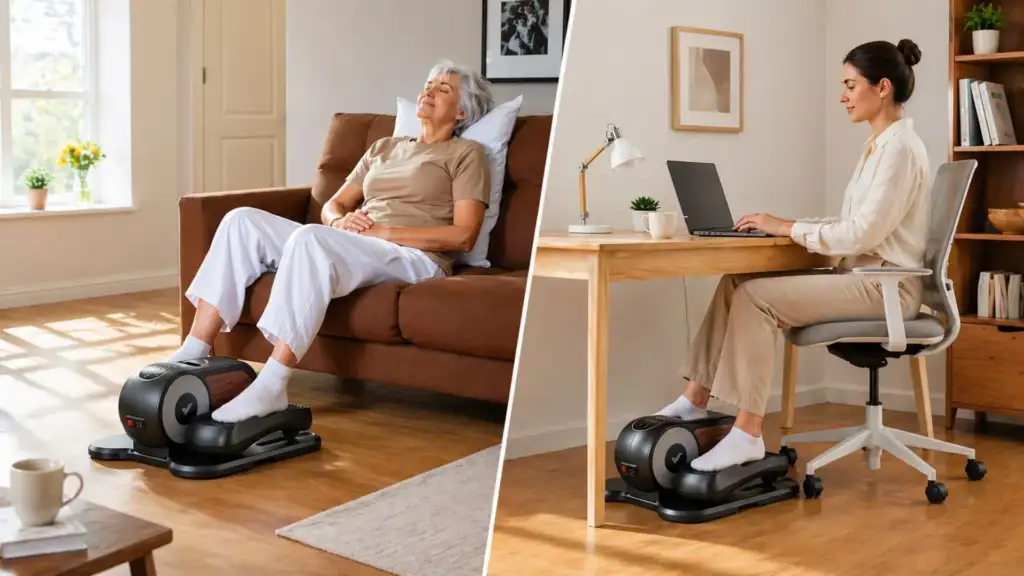
If you are still deciding between the two formats generally, not just for height reasons, our full walking pad vs treadmill comparison breaks down noise, price, and space tradeoffs beyond just belt size. And if your priority is minimizing footprint over maximizing belt length, it is worth comparing against the best under desk elliptical options too, since the circular pedal motion sidesteps the stride-length problem entirely.
Staying active during the workday matters regardless of your height. The CDC recommends at least 150 minutes of moderate-intensity aerobic activity per week for adults, and brisk walking counts toward that goal. A walking pad that actually fits your stride makes it much easier to hit that number without setting aside separate workout time. It also helps counter the risks of prolonged sitting; Mayo Clinic notes that short, frequent movement breaks throughout the day can offset a lot of the health risks tied to sitting for hours at a desk.
Frequently Asked Questions
What size walking pad is best for a 6 foot person?
Can a tall person use a regular walking pad?
What is the longest walking pad belt currently available?
Do walking pads work for people over 6'4"?
Is a treadmill better than a walking pad for tall people?
How do I know if a walking pad will feel cramped for my height?
Final Verdict on the Best Walking Pad for Tall People
For most readers, the WalkingPad Z1 is the best walking pad for tall people on the market right now. Its 47.6 inch belt gives a genuinely natural stride up to about 6’3″, it folds down small enough to disappear under a desk between walks, and its 4.2 star rating reflects consistent real-world reliability. If you also want a wider belt and a running option, the WalkingPad X21 matches that same length with more width and a stronger 4.8 star rating. For a higher weight capacity, the MERACH UltraWalk W60 is the stronger pick, and if you are past 6’2″ and want serious jogging capability, step up to the NordicTrack T Series, which carries the deepest and most reassuring review history of any pick in this guide.
Whichever you choose, do not skip past the belt length spec buried in the listing. It matters more for your day-to-day comfort than price, brand, or star rating combined.
For more home fitness equipment picks built around real space and body constraints, browse the rest of our reviews at StrengthBuzz.
Pingback: Walking Pad vs Under Desk Elliptical: Which Wins? (2026)